

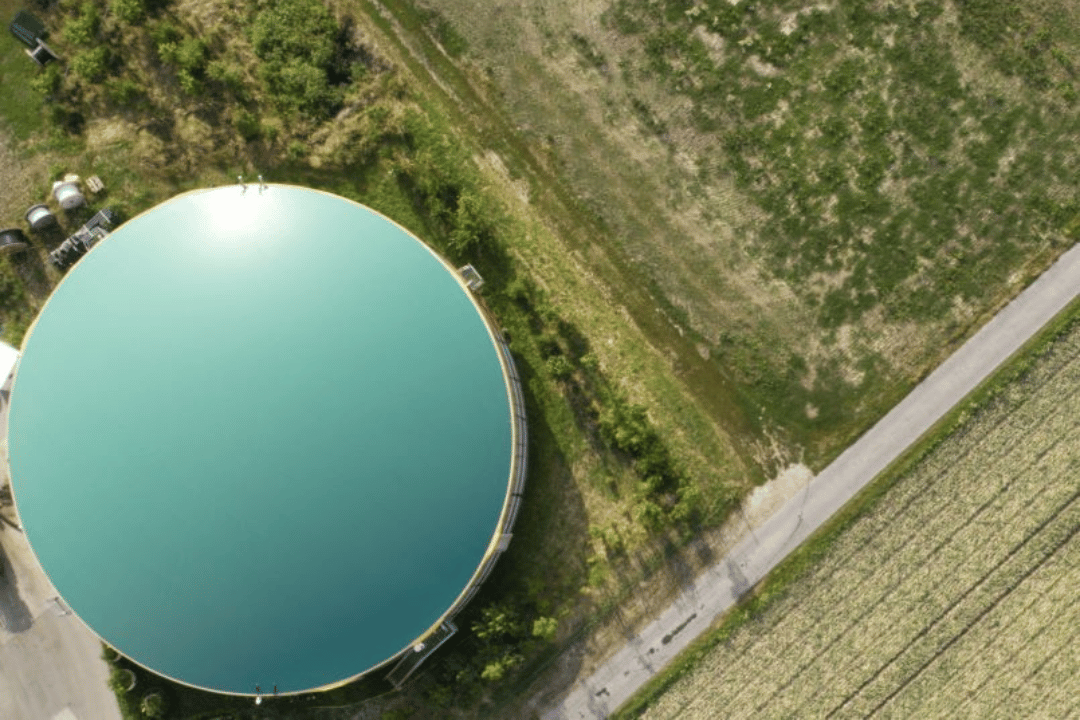
Where waste, policy and demand align to power bioenergy revenue streams
$10 billion
Bioenergy projected Australian GDP
Source: ABS 2026
26,000
Projected jobs
$9.6 billion
Pipeline of committed capital investment for new renewable assets
As Australia’s largest food and fibre producing state, Victoria provides significant volumes of recoverable agricultural, forestry, industrial and municipal waste, creating a reliable and scalable biomass supply. This supports expanded bioenergy production and underpins a growing renewable fuels industry.
At the same time, a substantial share of Victoria’s heavy transport and industrial base – including heavy manufacturing and parts of the chemical industry - relies on fossil fuels for activities and processes that are difficult to electrify. These hard-to-abate industries are creating sustained demand for renewable fuel solutions, positioning bioenergy as a critical pathway for heavy transport and industrial decarbonisation.
Government policies that are actively diverting waste from landfill re-enforce and accelerate demand for low-emissions energy solutions.
Whether you are developing standalone projects or integrating bioenergy into existing operations, Victoria enables businesses to reduce costs, create new revenue streams and strengthen ESG performance — all within a stable and investment-ready market.
Join global and major domestic companies investing in Victoria’s bioenergy and waste-to-energy sector. These investments range from landfill gas capture to advanced anaerobic digestion and biomass conversion technologies by companies such as Acciona (Spain), BayWa r.e. (Germany), Enel Green Power (Italy), INPEX (Japan), LMS Energy (Australian with international backing) and Mainstream Renewable Power (Ireland).
At a glance
- Bioenergy is projected to contribute $10 billion annually to Australia’s GDP and create over 26,000 jobs.1
- $9.6 billion pipeline of committed capital investment for new renewable assets, largest of all Australian states.2
- Network of 18 water corporations already active in bioenergy, demonstrating established capability and sector maturity.3
- Advanced local manufacturing and supply chain capacity.
Opportunities
Develop anaerobic digestion, pyrolysis or other biomass technologies to produce energy and renewable gas.
- Demand is driven by declining fossil gas supply and net zero targets.
- Victoria has legislated targets to halve food and organic waste to landfill by 2030.
- Rising demand from hard to electrify industries.
- Victoria’s theoretical biogas potential is estimated at 80.6 PJ per year, with possible capacity to meet ~ 37% of its annual gas consumption.
- Strong export potential into Southeast Asia’s growing renewable energy markets.
- Biomethane offers a scalable, commercially viable pathway aligned with long term decarbonisation goals.
- Rising need for equipment, systems and infrastructure to produce, upgrade and integrate renewable gas at scale.
- Opportunity to scale manufacturing beyond domestic demand into export markets.
- Leverage Australia’s highest concentration of manufacturing capability.
- Established ecosystem across precision engineering, fabrication and sensors.
- Regional bioenergy hubs like the Green Forestry Triangle provide direct access to high volume forestry residues.
- Opportunity to co-locate with existing waste-generating facilities.
- Opportunity to co-locate R&D, manufacturing and processing.
Why Victoria for bioenergy investment?
Direct access to one of Australia’s most diverse and scalable bioenergy feedstock
- Substantial feedstock resources – Victoria is Australia’s largest food and fibre producing state
- Agricultural waste from poultry, dairy, piggeries and cropping
- Commercial food waste and industrial organics
- Wastewater biosolids and sewage
- Abundant biofuel feedstocks include tallow from regional rendering facilities and used cooking oil for biodiesel production
- Forestry residues from major timber regions, such as The Green Forestry Triangle.
Victoria enables efficient production, distribution and export of bioenergy products.
- Globally-connected logistics network with extensive freight rail network, 4 deepwater ports and a 24-hour international airport linking regional feedstock sources to processing facilities and export markets.
- Existing large-scale energy and fuel processing assets, including Viva Energy Geelong Refinery and advanced biodiesel. facilities such as Bioenergy Australia’s Barnawartha facility, support large-scale fuel processing and distribution.
- Established bioenergy deployment at scale, with all 18 Victorian-Government-owned water corporations actively converting organic waste and sewage into biogas – demonstrating proven capability.
- Integrated supply chains across multiple sectors, providing consistent access to commercial, agricultural, industrial and wastewater feedstock streams.
Policy certainty for bioenergy projects
Victoria’s policy settings de-risk bioenergy investment, enabling project scale and improving project economics.
- Victoria leads the nation with a legislated target to half organic waste to landfill by 2030, driving long-term feedstock availability.
- Emissions Reduction Pledge (2026–2030), accelerating diversion of organic waste to bio-processing.
- Increased capacity cap on permitted waste for thermal processing from 2 million to 2.5 million tonnes per annum to encourage investment.
- The Victorian Recycling Infrastructure Plan guides long-term investment and identifies infrastructure gaps to encourage new biogas developments.
- Landfill levies setting that improve project economics – i.e. they do not apply to waste-to-energy facilities.
- EPA Victoria’s digestate regulatory instruments and guidelines simplify requirements and provide clear standards for developing and expanding bioenergy projects.
- The Waste, Recycling and Resource Recovery Investment Prospectus Women in Energy Strategy.
Reliable access to skilled talent, research capability and training pathways
Victoria combines specialised talent with a globally-recognised research and training ecosystem, supporting the development and deployment of bioenergy technologies.
- Access globally ranked universities and 12 TAFE (Technical and further education) institutions offering a diverse engineering, energy and advanced manufacturing talent pool.
- Targeted training supports new energy skills via the $50 million TAFE Clean Energy Fund.
- $7 million Victorian Government commitment to develop VET (Vocational education and training qualifications) in renewable energy.
- Globally-recognised innovation and research ecosystem supports ongoing capability development in new energy technologies.
Government support and incentives
Ongoing strategic government initiatives support investment in bioenergy and reduce investment risk.
Victorian Government
- Made in Victoria – Energy Technologies Manufacturing Program
- Breakthrough Victoria
- Victorian Circular Economy Recycling Modernisation Fund
- Recycling Victoria Data Hub
- GreenPower Renewable Gas Certification program
- Energy Innovation Fund (Round 3) – $10 million allocated for industrial electrification, with a focus on bioenergy in food and beverage manufacturing
- Sustainability Fund – $197 million provided to waste reduction and climate initiatives, contributing 2 billion kWh of renewable energy over the last 5 years
- Waste to Energy Fund: Bioenergy – a $10 million fund. Grants awarded to 26 projects to process residual organic waste and increase renewable energy generation.
Australian Government
- Clean Energy Finance Corporation – Australia’s ‘Green Bank’, with access to $32 billion in investment capital
- Australian Renewable Energy Agency (ARENA) provides financial assistance for research, development, demonstration, commercialisation and deployment of renewable energy technologies. Its $180 million Industrial Transformation Stream specifically mentions recovering biogas from dairy waste as a focus area
- National Reconstruction Fund Corporation – a $15 billion national investment fund designed to diversify and transform Australia's industry and economy
- The $1.5 billion Future Made in Australia Innovation Fund supports the commercialisation and demonstration of new clean energy technologies.
Recent investments
Public projects
- Colac Renewable Organics Network – Anaerobic digestion – produces 5.5 GW hours of clean, green, low-cost energy each year by Barwon Water
- Lilydale Bioenergy Facility – Anaerobic digestion – processes about 55,000 tonnes of food waste every year by Yarra Valley Water
- Melton Bioenergy Facility – Co-digestion - treats up to 5,000 kL of liquid waste and produces enough biogas to generate up to 1,000 MWh of renewable electricity annually by Greater Western Water
- Regional Renewable Organics Network Black Rock – Multi-tech hub – by Barwon Water
- Wollert Waste to Energy (ReWaste) – Anaerobic digestion – Victoria’s first waste-to-energy plant processes 33,000 tonnes of food waste annually to power an adjacent sewage plant by Yarra Valley Water.
Private projects
- Hallam Road Bioenergy Facility – by LMS Energy
- Katunga Fresh – Pyrolysis technology – converts wheat straw into glasshouse heating and biochar by Optimal Group
- Maryvale Energy from Waste by Veolia and Masdar (Tribe)
- Pavilion Biogas – Anaerobic digestion – converts chicken litter into 18 GWh of renewable power annually for local food producers
- Recovered Energy Laverton processes 240,000 tonnes of waste to power 30,000 homes annually
- Wyndham Bioenergy Facility by LMS Energy.
Looking to invest in a bioenergy project or the bioenergy supply chain in Victoria?
Our team can help you navigate the market to fast-track your project and avoid costly mistakes.
FAQs
There are several ways the Victorian Government provides incentives and support mechanisms for investing in bioenergy production as part of the state's transition to a circular economy. These include direct grant programs, market-based certificate schemes and federal investment vehicles.
The Department of Energy, Environment and Climate Action (DEECA) manage funds targeted at bioenergy infrastructure, including the $10 million Energy Innovation Fund and the $4 million Victorian Circular Economy Recycling Modernisation Fund.
Biogas projects can generate tradable certificates that provide ongoing revenue streams or offset capital costs through the Victorian Energy Upgrades (VEU) Program, the Australian Carbon Credit Unit (ACCU) Scheme and the Renewable Energy Target’s Large-scale Generation Certificates (LGCs).
Invest Victoria facilitates connections to major federal investment bodies for bioenergy projects, such as the Clean Energy Finance Corporation, the Australian Renewable Energy Agency (ARENA) and the National Reconstruction Fund (NRF).
The Victorian Recycling Infrastructure Plan guides long-term investment and identifies infrastructure gaps to encourage new biogas developments while Landfill Levy Incentives serve as an indirect economic incentive by improving the business case for diverting organic waste to biogas facilities instead of disposal.
A competitive global destination for bioenergy investment, Victoria leads Australian states in committed capital investment for new renewable assets, with over $9.6 billion in the pipeline.
Victoria’s economy is forecast to lead all Australian states in growth from 2026 to 2030 providing a stable environment compared to other global markets. Australia ranks third globally for average green industrial electricity costs, performing better than major regions like Japan, Eastern Europe and most of Asia.
As Australia’s largest food and fibre producer, Victoria has a massive theoretical biogas potential of 80.6 PJ per year, enough to meet 37% of the state's current gas consumption. The Victorian Government’s target to halve organic waste to landfill by 2030 creates a guaranteed demand for biomethane and waste-to-energy projects, while its infrastructure supports significant export potential to the Southeast Asian market.
Source
- Australia’s Bioenergy Roadmap Report - ARENA
- What Australia’s Renewable Energy Pipeline Looks Like - Energy Magazine
- Victoria's Water Sector Leading The Way On Renewables
