

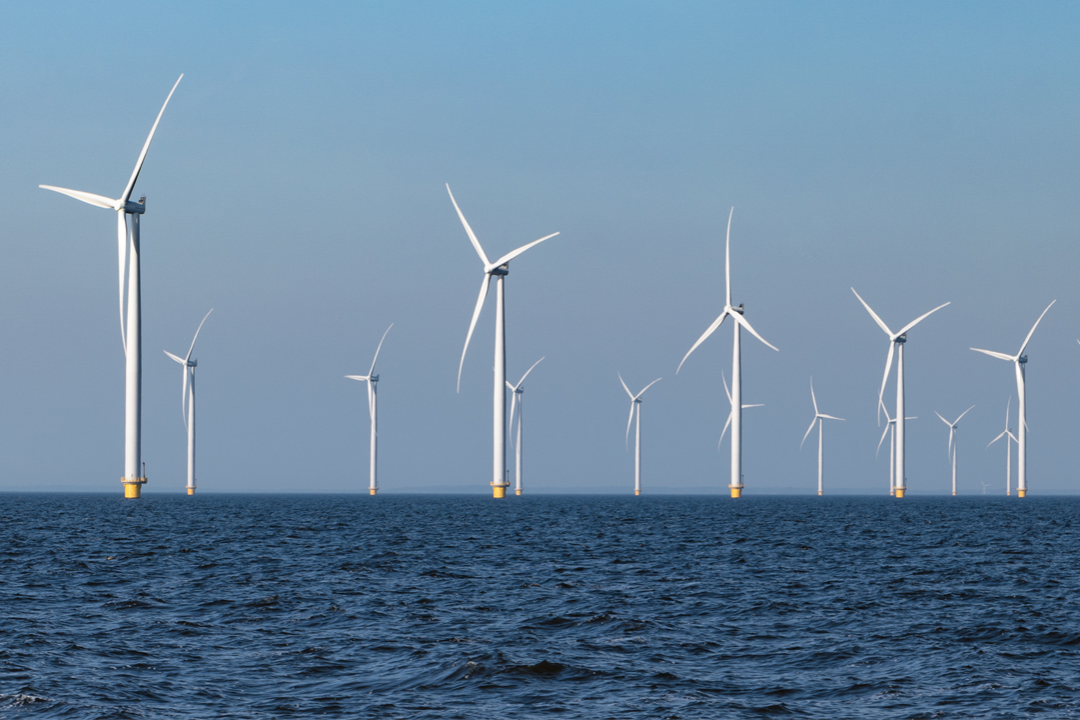
Australia’s most advanced offshore wind market
Gippsland offshore wind zone
9-10 meters per second
Average wind speed
68,000
Energy workforce projection by 2040
Gippsland offshore wind auction opens
August 2026
RFP for initial 2GW capacity
Victoria offers a compelling offshore wind energy investment environment in the Asia-Pacific, combining world-class wind resources, policy certainty and a long-term 9GW development pipeline.
Offshore wind energy is central to Victoria’s transition to net zero, supported by legislated renewable energy and offshore wind targets, a competitive procurement process and development of enabling infrastructure such as transmission and ports.
With 9 feasibility licences held in the Gippsland declared area, the first and largest area to be declared suitable for offshore wind, and the launch of Australia’s first offshore wind auction in August 2026, Victoria is leading the nation in its development of offshore wind.
Victoria’s advantages extend beyond generation. Investors benefit from State-coordinated port and transmission infrastructure projects, a skilled engineering and construction workforce, and a growing local supply chain supporting onshore and offshore deployment.
With rising electricity demand, a large domestic market and proximity to Asia-Pacific growth markets, Victoria presents significant opportunities across the full wind energy value chain - including project development, manufacturing, operations, maintenance and supporting services.
Victoria is transitioning rapidly from early-stage planning to commercial delivery, with the first projects expected to support Australia’s energy transition in the early 2030s.
Join global companies already progressing offshore wind energy projects in Victoria.
At a glance
- Victoria’s Gippsland offshore wind zone is Australia’s first and largest declared offshore wind development area and is a major focus for offshore wind investment.1
- The Gippsland offshore wind zone sees average wind speeds of above 9-10 meters per second.2
- Victoria's first offshore wind auction opened in August 2026. The Request for Proposal (RFP) is focused on an initial 2 GW of capacity.3
- At its peak, the offshore wind sector is estimated to require up to 2,300 – 4,000 jobs. As the industry matures and reaches its operational phase, an estimated 1,500 – 1,750 ongoing jobs will be needed over the 30-year life of the offshore wind assets.
- Victoria’s energy workforce is projected to grow to 68,000 by 2040.4
Opportunities
- The Gippsland declared area is located close to existing 500 kV transmission infrastructure in the Latrobe Valley, which will help to connect offshore wind generation to Victorian homes and businesses.
- VicGrid's transmission planning and the Gippsland Shoreline Renewable Energy Zone will support integration of offshore wind projects into the broader network.
- Industry roadmaps anticipate that the combined national wind capacity (onshore and offshore) will need to reach between 60 GW and 90 GW by 2035–2045 to stay on track for net zero 2050.
- The first 2 GW creates a pathway towards Victoria's 9 GW offshore wind target while supporting the growth of workforce capability, regional industry, supply chains and long-term investment confidence. It delivers a foundation for providing original equipment manufacturers (OEMs) with long-term pipeline certainty.
- Global demand for offshore wind components is placing pressure on established supply chains, creating potential opportunities for investment in selected manufacturing, assembly and supply chain activities over time.
- Victoria’s first mover advantage in Australia presents opportunities for manufacturing that may extend to other jurisdictions over time.
- Current and future demand for quality composite materials, fibreglass and steel used in the construction of wind turbine structures and towers is projected to grow significantly.
- Operations and maintenance (O&M) is one of the largest sources of long-term expenditure in offshore wind, accounting for approximately 30% of total lifecycle costs and supporting activity over the 25-30 year operating life of a wind farm.5
Why Victoria for offshore wind investment?
Victorian policy certainty and legislated offshore wind targets
- Victoria has a legislated net zero by 2045 target, the first Australian state to do so and the most ambitious.
- Victoria is the only state with legislated offshore wind energy generation targets, building to 9 GW.
- The retirement of the state's largest coal-fired generators by 2028 and 2035, create a vast market opening for wind developers.
- Victoria’s first offshore wind auction will use the Electricity Services Entry Mechanism (ESEM), designed to provide long-term revenue certainty.
World-class wind resources and declared development zones
- The Australian Government has declared 2 offshore wind zones in Victoria, Gippsland and the Southern Ocean region. Both were selected for their strong wind resources, seabed conditions and proximity to existing transmission infrastructure.
- The Gippsland offshore wind zone benefits from consistently high average wind speeds of around 9 metres per second. These speeds are world-class and are comparable to those in established offshore wind markets like the North Sea.
- Gippsland’s relatively shallow waters (50–60 metres deep), enable fixed-bottom turbine foundations, a proven and cost-effective technology.
Significant Victorian Government support for enabling infrastructure
- The Victorian Transmission Plan (VTP) identifies priority projects over the next 15 years to unlock wind-rich regions and connect them to major load centres.
- VicGrid is developing the shared transmission line to connect 2 GW of offshore wind energy generated off the Gippsland coast to the grid. The line will use 500 kV double-circuit overhead transmission technology, starting at Giffard and connecting to the existing grid at Loy Yang
- $124.5 million investment in the Victorian Renewable Energy Terminal at the Port of Hastings to progress environmental and procurement activities for Australia's first off-shore wind port. The port is designed to support assembly, staging and deployment of offshore wind turbines of 18 MW or more.
Established supply chains and a skilled workforce
- Victoria, as Australia's leading manufacturing state, provides a strong base for energy infrastructure, engineering services and component production.
- Established capabilities in steel fabrication and electrical systems, engineering and industrial services.
- Growing opportunities for local manufacturing, assembly and supply-chain participation as Australia's offshore wind industry develops.
- Large and growing energy workforce, projected to reach 68,000 by 2040.
- Home to the Asia Pacific Renewable Energy Training Centre (APRETC), the National Training Centre in New Energy Skills, and the Victorian Renewable Energy TAFE Centre of Excellence.
- Victoria's offshore wind workforce is expected to be highly skilled, with 94% of roles requiring vocational education and training or university qualifications.
- Clear training and workforce pathways are being developed to support offshore wind, transmission and broader energy infrastructure projects.
- Globally recognised universities, research institutions and innovation networks support ongoing capability development in renewable energy technologies.
Government support and incentives
Ongoing strategic government initiatives support investment in wind energy and reduce investment risk.
Victorian Government
- Energy and Public Land Legislation Amendment (Enabling Offshore Wind Energy) Act 2024 (Vic)
- Offshore Wind Energy Victoria (OWEV) is coordinating the development of Victoria's offshore wind sector, guiding industry and communities toward an offshore wind energy future.
- Energy Innovation Fund (EIF) – Round 1 and 2 provided approximately $49 million across 4 major offshore wind projects to support feasibility and pre-construction activities.
- $1.6 billion clean energy package to accelerate wind farm development, including direct investment through the SEC and streamlined project approvals.
Australian Government
- The Electricity Services Entry Mechanism (ESEM) is designed to accelerate post-2030 renewable generation.
- Future Made in Australia Innovation Fund.
Feasibility licence holders
Victoria’s offshore wind feasibility licence holders are major developers, delivering over 30 GW of offshore wind globally.
Looking to invest in offshore wind energy production or the wind turbine supply chain in Victoria?
Our team can help you navigate the market to fast-track your project and avoid costly mistakes.
FAQs
To participate in Victoria’s first formal offshore wind auction, you must meet specific federal and state regulatory prerequisites.
The most critical requirement for entry is holding a Commonwealth Feasibility Licence issued under the Offshore Electricity Infrastructure Act 2021.
In July 2024, the Australian Government awarded 12 licences for the Gippsland offshore wind zone. Only these licence holders (or their designated joint ventures) are eligible to bid for the first 2 GW of capacity.
If you would like to participate in the second formal offshore wind auction, please contact us for more information.
The Victorian Government offers a multi-layered support package for offshore wind investors. Access to the Electricity Services Entry Mechanism (ESEM) will ensure the financial viability of offshore wind projects with revenue certainty for 10–15 years.
Successful bidders in the August 2026 auction will receive a government-backed support package, such as a Contract for Difference (CfD).
VicGrid’s development of a 500 kV double-circuit overhead line will connect the first 2 GW of Gippsland offshore wind to the existing grid at Loy Yang, centralising the planning and delivery of transmission infrastructure and significantly reducing the burden on individual developers.
Beyond the major auction, direct financial grants are available for early-stage development and workforce training.
The Victorian Renewable Energy Terminal will serve as a centralised hub for the construction, maintenance and eventual decommissioning of offshore wind infrastructure, providing a ready-made logistics base for investors.
Victoria's offshore wind often peaks during evening demand periods, a profile highly valued by grid operators compared to many northern hemisphere sites.
Much of the Gippsland zone features relatively shallow waters (under 50–60m), making it ideal for fixed-bottom foundations. This is a major advantage over emerging zones in Japan or the US that require more expensive floating technology.
Unlike remote sites in the US and Brazil, Victoria's primary offshore zone is adjacent to the Latrobe Valley's existing high-voltage transmission hub.
Victoria is strengthening project bankability through structured revenue support mechanisms such as ESEM, aligning local opportunities with the risk settings seen in leading European energy markets.
Source
- Gippsland, Victoria declared offshore wind area
- Global Wind Atlas
- Victoria’s First Offshore Wind Auction To Go Live In August
- Wind worker fact sheet
- Fortune Business Insights, Australian Wind Turbine Operation and Maintenance Market Size, Share & Industry Analysis, By Type (Scheduled and Unscheduled), By Location (Onshore and Offshore), and Country Forecast, 2025-2032
